


.svg)


Why GLP-1 research matters in 2025
GLP-1 medications have taken the world by a storm the past few years because of the dramatic weight loss some have been able to achieve. With as many as 40% of American adults having overweight or obesity, this is a big deal.
While GLP-1 drugs have been used for diabetes treatment for decades, their use for weight management is relatively recent. GLP-1s for weight loss and other uses is expected to continue to grow, and with that growth comes an increased focus on GLP-1 research.
“GLP-1 medications have changed the way researchers think about metabolic health,” said Dr. Asad Niazi, internal medicine physician. “For the first time, we have therapies being studied for their potential to influence weight regulation, blood sugar, and other aspects of cardiometabolic function. The research shows that we are exploring the underlying biology behind metabolism, not just focusing on weight.”
What are GLP-1 drugs and how do they work for weight loss?
GLP-1 drugs are receptor agonists that mimic a gut hormone our bodies naturally produce after we eat: glucagon-like peptide-1 (GLP-1). This hormone stimulates insulin release to help regulate glucose levels (supporting steadier energy levels), slows stomach emptying (helping you feel full for longer), and signals to the brain to reduce hunger (potentially quieting food noise and reducing cravings).
Most people experience fewer cravings and consume fewer calories while on GLP-1 treatment, making it a good weight-loss tool.
Common GLP-1 drugs include:
- Semaglutide (active ingredient in Ozempic® and Wegovy®)
- Tirzepatide (active ingredient in Mounjaro® and Zepbound®). Tirzepatide also works on GIP receptors, giving it a dual mechanism of action.
These drugs act like your body’s natural GLP-1 hormone, but with greater effect.
FDA overview: Approved GLP-1 agonists for weight loss in the U.S.
As of 2025, there are three GLP-1 drugs FDA-approved for weight management. These include:
- Wegovy® (semaglutide)
- Zepbound® (tirzepatide)
- Saxanda (liraglutide)
Other GLP-1s, such as Ozempic® and Mounjaro®, are FDA-approved for type 2 diabetes treatment only, but have been shown to help people lose weight and are sometimes prescribed “off-label” to treat obesity.
While more than a dozen GLP-1 receptor agonists have FDA approval, only Wegovy®, Zepbound®, and Saxanda are approved specifically for weight management. Doses and formulations matter; the versions approved for other uses (like diabetes) often have a different dose or schedule than the version approved for obesity.
For GLP-1s that are FDA-approved for weight management, certain criteria must be met before a provider can write a prescription. For example, Zepbound® is FDA-approved for chronic weight management in adults with obesity or overweight who have at least one weight-related condition, such as high blood pressure, type 2 diabetes, or high cholesterol.* A person’s medical history and health goals will also need to be taken into consideration.
Learn more about the approved uses for the most common GLP-1 drugs here.
Compounded GLP-1s: What U.S. patients need to know
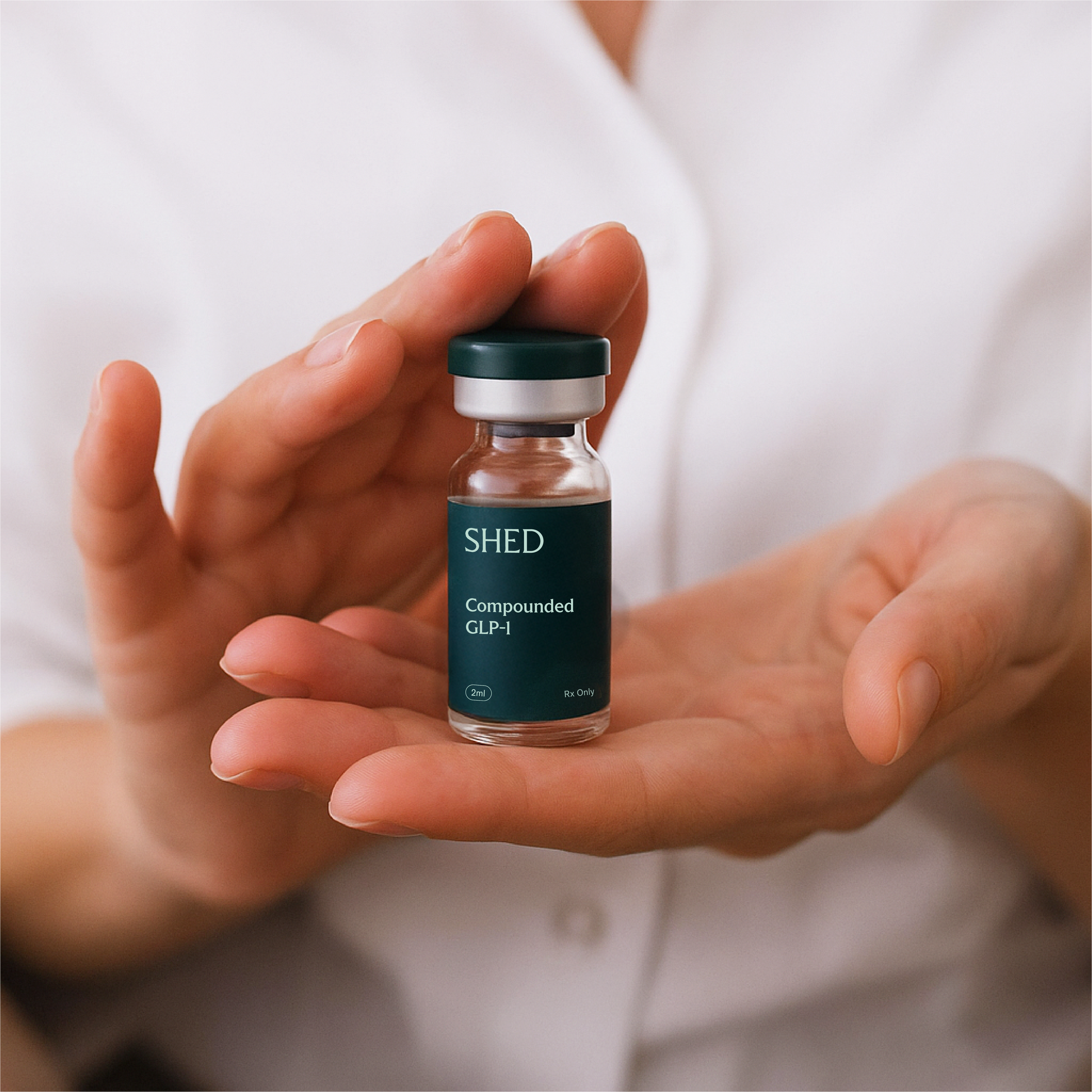
Compounded drugs are made by licensed pharmacies rather than the original manufacturer. These versions are made when brand-name supply is scarce or to meet the specific needs of individual patients.
Compounded GLP-1s are not reviewed or approved by the FDA for safety, effectiveness, or quality. However, they are made in accordance with regulatory guidelines. If your clinician determines that a compounded medication is clinically appropriate for you, please be aware that it is not an FDA-approved product.
If you’re considering a compounded GLP-1 to help with weight loss, keep the following guidelines in mind:
- Use only licensed pharmacies
- Use only as prescribed by a licensed provider
- Follow your provider’s instructions on dosing and storage
Most significant side effects seen in 2025 research
The most common side effects of GLP-1 medications are gastrointestinal. These include:
- Nausea
- Vomiting
- Constipation
- Diarrhea
- Indigestion or stomach discomfort
- Bloating
- Reduced appetite
- Delayed gastric emptying (feeling unusually full or experiencing slow digestion)
Other common side effects may include:
- Headache
- Fatigue
- Injection site reactions
Rare but serious side effects may also occur. These include:
- Pancreatitis
- Gallbladder problems
- Changes in kidney function
- Severe abdominal pain
- Jaundice
- Changes in urination
- Swelling
Severe symptoms of any kind should be reported to your provider immediately. Other symptoms tend to be dose related and typically fade over time as your body adjusts. If symptoms persist, contact your provider about possibly changing your dose or medication. Do not change your dose without consulting with your provider first.
Patient experiences: Real-world outcomes and discontinuation paths
In a landmark 2025 head-to-head trial comparing tirzepatide and semaglutide, both medications showed meaningful weight reductions. The study, conducted over 72 weeks across 32 sites in the United States and Puerto Rico, was sponsored by Eli Lilly.
Highlights from study findings include:
- 751 individuals participated in the study
- The mean percent change in weight at week 72 was -20.2% for those taking tirzepatide and -13.7% for those taking semaglutide
- The most common side effects were gastrointestinal
A 2025 real-world study of over 2,300 patients treated at an academic obesity clinic also showed meaningful weight loss, especially among those who stayed on therapy for at least a year. Median weight loss was 14.4%, which is lower than what some clinical studies have found.
“In my experience with GLP-1 therapy, I’ve observed that patients who stay consistent with their treatment and make gradual dose adjustments often see results that align with what clinical trial data report,” said Dr. Niazi. “This underscores the importance of ongoing clinical support rather than relying on a one-time prescription.”
For those who discontinue treatment, studies have shown that many patients regain at least some of the weight they lost. Obesity is a chronic condition, and typically requires long-term treatment to maintain desired outcomes.
However, those who establish healthy habits (balanced diet, adequate sleep, regular exercise, etc.) are more likely to maintain the results they achieved while taking a GLP-1. Tapering off slowly has also been shown to help people maintain the habits they developed while on GLP-1 treatment. Those who utilize behavioral support, like health coaching, may have a better chance of keeping weight off after discontinuation as well.
Emerging therapies: New GLP-1 agonists and what’s in the pipeline
“We are entering a new era where GLP-1 agonists are only the foundation,” said Dr. Niazi. “The science is moving fast, and we are only beginning to see what is possible.”
In 2025, a big focus in GLP-1 research has been expanding beyond “single-pathway” GLP-1 receptor agonists. One of the newest GLP-1s on the market, tirzepatide, is a dual-action agonist, targeting receptors on both the GLP-1 and GIP pathways. Weight loss tends to be higher with tirzepatide when compared to semaglutide, which may be due to the dual action. Expect to see more research on the efficacy of targeting multiple hormone receptors for weight loss in the coming months and years.
Another area with potential for growth is GLP-1 administration methods. Most people take GLP-1 via subcutaneous (under the skin) injections, but more oral alternatives, such as drops, lozenges, and tablets, are becoming available, expanding access for more people.
Another development to keep an eye on is what the U.S. government is doing to make GLP-1 drugs more accessible to more Americans. This includes potentially allowing Medicaid and Medicare to cover GLP-1s for weight management as well as making these drugs more affordable to those without insurance coverage.
In short, a lot has happened around GLP-1s in 2025. One thing is clear: GLP-1s aren’t merely the latest wave people are trying to ride before it peters out. These drugs have the potential to transform how we approach weight management and overall health, and many have already seen the effects on a personal level.
FAQs: 2025 GLP-1 research
How do GLP-1 drugs affect metabolic health beyond weight loss?
2025 GLP-1 research shows that GLP-1 agonists like semaglutide and tirzepatide not only help reduce weight but may also play an indirect role in improving cardiometabolic outcomes, such as blood pressure and lipid profiles.
Are there differences in real-world vs. clinical trial results for GLP-1s?
While both settings report meaningful weight loss, real-world studies in 2025 indicate slightly lower outcomes. Researchers suggest this is due to treatment adherence, dose adjustments, and lifestyle variations, which are more difficult to control in a clinical setting.
What do 2025 studies say about GLP-1 therapy and weight regain after discontinuation?
New analyses confirm that stopping GLP-1 therapy often leads to weight regain. However, research also shows that gradual tapering, combined with behavioral support and lifestyle modifications, can help preserve weight loss long term.
How are GLP-1 drugs affecting national obesity trends?
Preliminary 2025 population data suggests that widespread GLP-1 adoption may have contributed to a modest decrease in average U.S. adult BMI for the first time in decades, particularly among adults aged 30–60. That being said, long-term tracking is needed to confirm lasting effects.
Are GLP-1 medications safe for long-term use?
Long-term observational studies from 2025 show that GLP-1s are generally well tolerated over 2–3 years. Gastrointestinal side effects remain the most common (which tend to fade over time), but serious adverse events are rare.
Resources and further reading
- https://pmc.ncbi.nlm.nih.gov/articles/PMC11940170
- https://jamanetwork.com/journals/jamainternalmedicine/fullarticle/2836527
- https://www.tfah.org/report-details/state-of-obesity-report-2025/
- https://www.nejm.org/doi/full/10.1056/NEJMoa2416394
- https://pubmed.ncbi.nlm.nih.gov/40762026/
- https://pubmed.ncbi.nlm.nih.gov/40186344/
- https://www.who.int/news/item/01-12-2025-who-issues-global-guideline-on-the-use-of-glp-1-medicines-in-treating-obesity
*Individual results may vary.
This information is for educational purposes only and is not a substitute for medical advice. Please consult your healthcare provider before starting or changing any medication.
Zepbound® is a registered trademark of Eli Lilly. Our compounded medications are not affiliated with, nor endorsed by, Eli Lilly, and are not reviewed by the FDA for safety or efficacy.
Wegovy® is a registered trademark of Novo Nordisk. Our compounded medications are not affiliated with, nor endorsed by, Novo Nordisk, and are not reviewed by the FDA for safety or efficacy.