



.svg)


Around 70% of Americans have overweight or obesity, driven in part by the standard American diet that is high in ultra-processed foods. To help combat this, the U.S. government released its updated Dietary Guidelines for Americans last week, which emphasizes whole, nutrient-dense foods.
If “eat a healthier diet” is on your list of resolutions for 2026, these guidelines can provide a solid foundation to help you build healthier habits long term, especially if you’re on a GLP-1.
Foods to prioritize
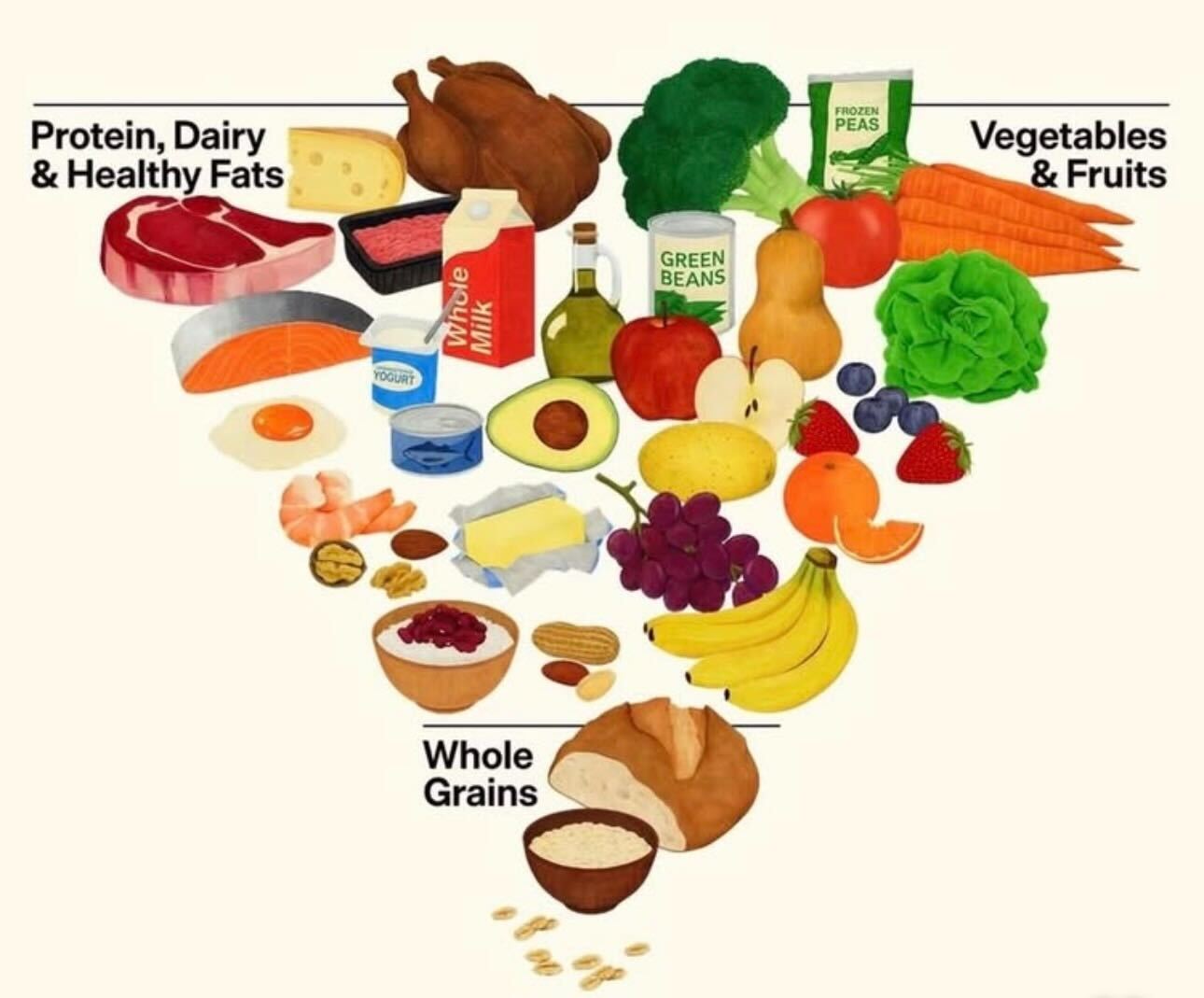
Here’s a quick breakdown of what the new food pyramid looks like. (Recommendations are based on a 2,000-calorie dietary pattern. Adjust as needed for your individual caloric needs.)
Protein
Recommendation: 1.2–1.6 grams per day. For example, if you weigh 150 pounds, that would be around 80–110 grams of protein per day.
How to get it: Eat high-quality protein with every meal from a variety of protein sources. This includes animal sources (eggs, poultry, seafood, red meat) and plant-based foods (beans, peas, legumes, nuts, seeds).
Dairy
Recommendation: 3 servings per day.
How to get it: Choose full-fat dairy with no added sugars. Dairy is an excellent source of protein, healthy fats, vitamins, and minerals.
Vegetables and fruits
Recommendation: 3 servings of vegetables, 2 servings of fruits per day.
How to get it: Eat fruits and veggies in their whole, original form as much as possible. Frozen, dried, or canned with no or limited added sugars can also be nutritious choices.
Healthy fats
Recommendation: Saturated fat consumption should not exceed 10% of total daily calories.
How to get it: Healthy fats are plentiful in many whole foods, including meats, eggs, seafood, nuts, seeds, full-fat dairy, and avocados. Prioritize cooking oils with essential fatty acids, like olive oil.
Whole grains
Recommendation: 2–4 servings per day.
How to get it: Choose fiber-rich whole grains over white bread, flour tortillas, and ready-to-eat snacks (like crackers) made with white flour.
Foods to limit
The new guidelines also include recommendations on what foods to avoid.
Ultra-processed foods
Avoid: Highly processed packaged or ready-to-eat foods that have added sugars and sodium, such as chips, cookies, candy, and ready-to-eat meals.
Eat this instead: Nutrient-dense foods and home-prepared meals.
Added sugars
Avoid: Foods and drinks that are sugar-sweetened. Watch out for ingredients that include the words “sugar” or “syrup” or that end in “-ose.”
Eat (or drink) this instead: Foods with naturally occurring sugars, such as fruit or plain milk. While no amount of added sugars or non-nutritive sweeteners is recommended, one meal should contain no more than 10 grams of added sugars.
Refined carbohydrates
Avoid: White breads, white rice, pasta made from refined flour, sugary cereals, baked goods, and candy.
Eat this instead: Whole foods or packaged foods low in added sugars.
Alcoholic beverages
Alcohol should be limited. Those who should avoid it completely include pregnant women, people with alcohol use disorder (AUD), people taking certain medications, and people with medical conditions that can interact with alcohol.
Why these guidelines are important for GLP-1 users
Ultra-processed foods account for nearly 60% of the average U.S. adult’s calorie consumption. If you’re on a GLP-1, you’ve probably been advised to avoid rich, greasy, sugary, and high-calorie foods, as they can exacerbate GI symptoms. The new food pyramid aligns with recommendations patients have already been getting from their providers, especially the importance of protein and choosing whole foods over highly processed ones.
With these new guidelines in place, finding GLP-1–friendly foods should gradually get easier as food companies and grocery stores adjust their offerings to match more closely with federal guidelines. Since GLP-1 treatment should be paired with a balanced, nutritious diet and regular movement, the new food pyramid spells good news for those who want to get the most from their GLP-1 treatment.
Final takeaway: Eat real food
These guidelines were established to help Americans get back to the dietary basics, i.e., eating real food over processed. If you’re unsure how to adopt healthy habits that support your nutrition needs, a Shed Health Coach can help you create a plan that fits with your goals and lifestyle.
Check out our Shed Metabolic Foundation Plan for more guidance on how to build consistent healthy meals.
FAQs
How does the new food pyramid support people on GLP-1 medications?
The updated food pyramid emphasizes whole, nutrient-dense foods and plenty of protein, two priorities for people on GLP-1 medications. These foods help support muscle mass, stabilize blood sugar, and can help reduce common GLP-1 side effects like nausea, bloating, or diarrhea, making it easier to eat less overall without sacrificing the nutrients you need.
Do GLP-1 users need to follow the food pyramid exactly?
No. These guidelines are just that—guidelines. Those with different caloric needs or dietary restrictions often need to personalize their meal plans. Consult with a dietician or health coach if you have questions about your dietary needs.
What counts as ultra-processed food, and why should GLP-1 users limit it?
Ultra-processed foods are industrially made products with added sugars and sodium, refined carbs, and artificial sweeteners or flavors. These foods are high in calories but low in nutrients. Examples include chips, baked goods, candy, and ready-to-eat meals. These foods can cause nausea, bloating, or blood sugar swings for people on GLP-1s.
How much added sugar is acceptable while on a GLP-1?
No added sugars are recommended under the new federal guidelines. Avoiding added sugars entirely can be a difficult feat, however, so try to keep added sugars under 10 grams per meal.
References
https://cdn.realfood.gov/DGA.pdf
https://www.cdc.gov/nchs/fastats/obesity-overweight.htm
This content has been reviewed by a licensed dietitian for educational purposes. It is not a substitute for medical advice.