



.svg)


There’s something about April that makes you want to throw open the windows, wipe everything down, and finally deal with that pile you’ve been ignoring.
We usually think of spring cleaning as a house project. But it can also be a mental reset.
If your home, desk, or digital space has been feeling crowded, overwhelming, or just plain noisy, you’re not imagining the effect it can have on you. Research suggests that cluttered environments can compete for your attention, increase stress, and make it harder to focus. A 2024 update from the National Eye Institute explained that visual clutter changes how information flows in the brain, which helps explain why messy spaces can feel so mentally draining.
That doesn’t mean your house or office has to look perfect. This isn’t about chasing some unrealistic, spotless, color-coded life. It’s about creating a space that feels a little calmer, a little easier to move through, and a little more supportive of the life you’re trying to live.
And honestly, sometimes clearing one counter can feel like clearing your head.
Why clutter can feel so heavy
Your brain is constantly taking in information from the world around you. When there’s a lot of visual clutter, your brain has to work harder to sort through what matters and what doesn’t. That can leave you feeling mentally “on” all the time, even when you’re just standing in your kitchen or sitting at your desk.
That mental load doesn’t always show up dramatically. Sometimes it’s subtle. Maybe it feels harder to get started on work when your desk is covered in papers. Maybe your bedroom doesn’t feel restful because there’s too much visual noise in it. Maybe you walk into a cluttered room and instantly feel behind.
This is part of why your environment matters. A 2023 systematic scoping review found that physical home-workspace characteristics were linked with mental health, concentration, productivity, and well-being. You can read it here: How physical home workspace characteristics affect mental health: A systematic scoping review.
What the research actually says about clutter
One of the most well-known studies on this topic comes from researchers Darby Saxbe and Rena Repetti. They found that women who described their homes as more cluttered, unfinished, or stressful had less healthy daily cortisol patterns and reported a more depressed mood. Cortisol is one of the body’s main stress hormones, so this study helped connect the experience of clutter with measurable stress responses. You can view it on PubMed or at the journal page.
Now, I want to be clear here. Clutter isn’t the sole cause of anxiety, overwhelm, or low mood, and not every messy room is a mental health problem. Most research shows associations, not direct cause and effect. But the pattern is still meaningful. Environments that feel chaotic or visually overwhelming can add friction to daily life, making it harder to feel calm, focused, and settled.

Your workspace counts, too
Spring cleaning isn’t just about closets and junk drawers. Your workspace matters, too.
If you work from home, study from home, or even just pay bills and answer emails in the same spot every day, the setup around you can either support your focus or chip away at it. The same 2023 review found links between home-workspace setup and concentration, sleep, and mental health.
This doesn’t mean your desk has to be empty. Some people genuinely like a little organized chaos. But if your space leaves you feeling scattered, distracted, or tense, that’s useful information.
A good question to ask this spring is: Does this space help me do what I’m trying to do here?
If the answer is no, you don’t need a full makeover. You might just need a reset.
Why cleaning up can feel so satisfying
One reason spring cleaning feels so good is that it can restore a sense of control.
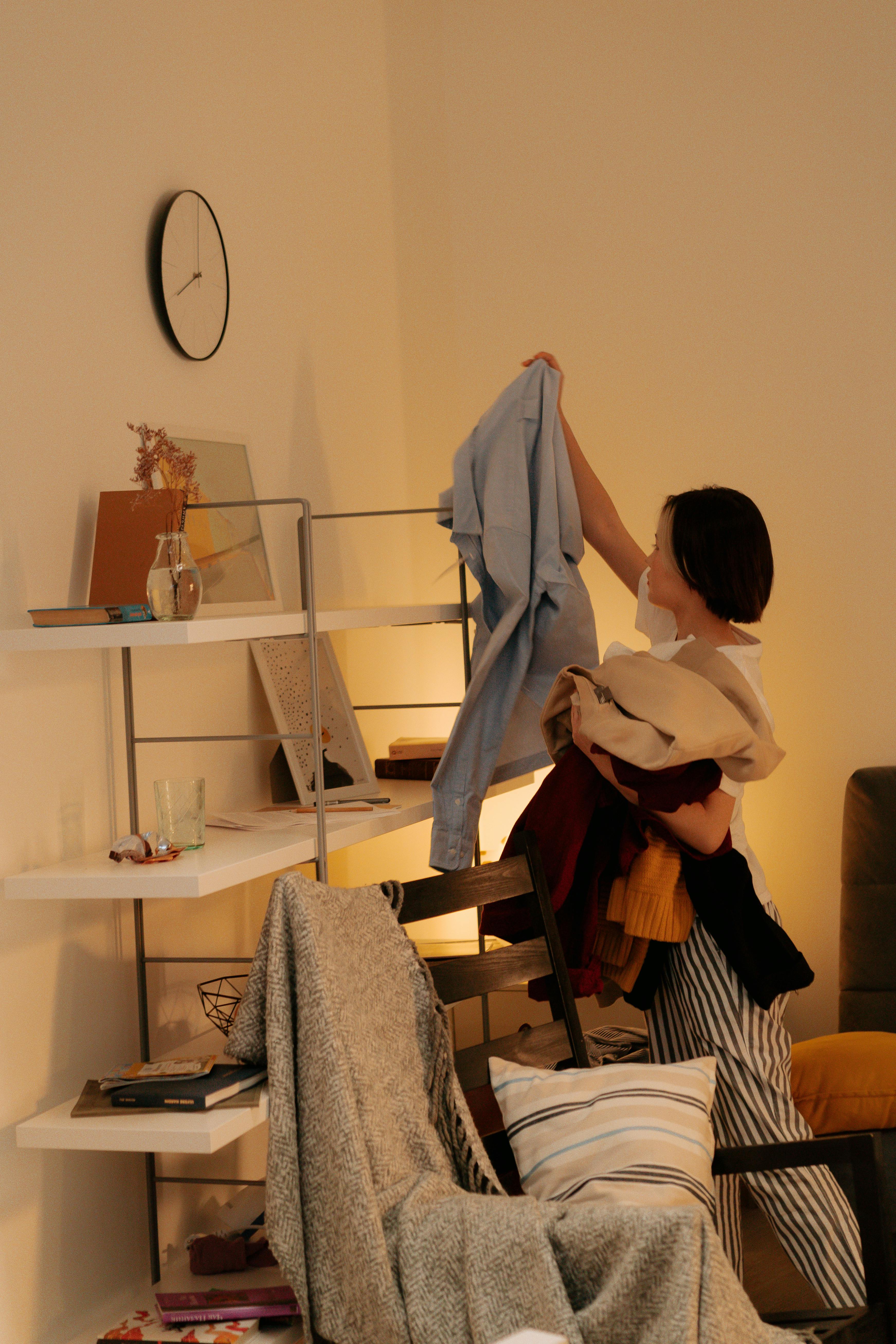
When life feels busy, clutter can become a visual reminder of everything that’s unfinished. Laundry that needs folding. Papers that need sorting. That one bag sitting by the door for days. It all quietly adds up. Clearing one counter, one drawer, or one corner can create a small but real sense of progress. And sometimes that little win is exactly what your nervous system needs.
That sense of control can help with your health habits, too. When your environment feels calmer, it’s often easier to follow through on basics like making meals, going to bed on time, moving your body, or sitting down to work without instantly feeling overwhelmed. Shed has also covered how stress can affect sleep, cravings, and weight-loss plateaus, which makes this even more relevant. You can read that here: The link between stress and weight-loss plateaus.
Don’t forget digital clutter
Not all clutter is physical.
Sometimes the space that feels the most overwhelming is your digital desktop, your downloads folder, your inbox, or your phone. Digital clutter can create that same background feeling of “too much.” A 2025 open-access paper on digital hoarding describes it as an emerging behavior with possible implications for psychological well-being and daily functioning. Learn more here: Lots of Digital Files? How Digital Hoarding Is Related to Different Aspects of Digital Well-Being.
If your phone is full of screenshots, your inbox has thousands of unread emails, and your computer desktop is covered in random files, that counts as clutter. A digital spring reset might look like deleting old files, unsubscribing from emails you never read, organizing your notes, or turning off notifications that constantly interrupt your focus.
You don’t have to do all of it. Even one small digital cleanup can make your day feel lighter.
A simple spring-cleaning reset that actually helps
You do not need to overhaul your whole house in one weekend. In fact, that usually just makes the whole thing feel more overwhelming.
A better approach is to keep it simple, realistic, and supportive.
Try this:
- Start with one area you see every day, like your kitchen counter, desk, nightstand, or bathroom sink.
- Focus on function first. Ask yourself, “What would make this space easier to use?”
- Create one reset point in your home, a spot that feels calm when you walk by it.
- Set a 10-minute timer instead of waiting for the perfect afternoon.
- Let “better” be enough. It does not have to be perfect to help.
This kind of reset can reduce friction in your day, which often makes healthy choices easier to repeat. The more supportive your environment is, the easier it can be to follow through. That idea aligns with the workspace research linking the physical setup to concentration, stress, and well-being.
When clutter is about more than clutter
Sometimes clutter isn’t really about organization at all.
Sometimes it’s about burnout. Or grief. Or anxiety. Or depression. Or ADHD. Or just being in a season where you’re carrying too much and don’t have much left over.
If that’s where you are, I really want to say this clearly: more self-criticism is not the answer. Support is.
If clutter feels deeply distressing or completely unmanageable, it may help to ask for support, whether that means a friend, a coach, or a mental health professional. Research on digital hoarding and related behaviors also supports the idea that clutter can sometimes reflect something deeper than simple disorganization.
Final thoughts
Spring cleaning isn’t just about making your house look better. It’s about making your space feel better to live in.
You don’t need a picture-perfect home. You don’t need matching bins, spotless counters, or a minimalist aesthetic. You just need a space that supports your life a little more and drains you a little less.
So this April, instead of thinking of spring cleaning as one more thing on your to-do list, think of it as a form of self-care. Clear one shelf. Reset one desk. Tidy one corner. Small shifts can change how a space feels, and sometimes, how you feel in it too.
Shed can help!
If stress, overwhelm, or daily habits have been feeling harder than usual, Shed’s Health Coaching can help you build realistic routines that fit your real life.
FAQs
Can clutter really affect your mental health?
Yes. Research suggests cluttered or chaotic environments may increase stress, compete for attention, and make it harder to focus or feel settled. See the National Eye Institute summary and the PubMed study on home clutter and cortisol.
Do I need to become a minimalist?
No. This isn’t about owning less for the sake of it. It’s about making your space feel more functional and less mentally noisy.
Does digital clutter count too?
Yes. Emerging research suggests digital clutter and digital hoarding may also affect well-being and day-to-day functioning. Read more here: Lots of Digital Files? How Digital Hoarding Is Related to Different Aspects of Digital Well-Being.
What if clutter feels overwhelming to deal with?
Start very small. If clutter feels tied to burnout, anxiety, depression, or something deeper, support from a coach, therapist, or trusted person may help.