




.svg)


Concluding your time in the military and returning to civilian life is a unique time of transition for many service members. You need to make many important decisions about your life to prepare for the changes properly, ranging from where you’ll live to what kind of job you’ll get.
Amid the stress and chaos of this transition, it’s easy for your health to become a much lower priority. However, as a new veteran, your health, and especially your metabolic health, is vulnerable during the challenges of this time, even from your initial days back home. To set yourself up for a long and successful life as a civilian, it’s also crucial to focus on your health.
The metabolic baseline during your military service
Military service may establish a higher metabolic demand for some service members, especially those in special training or combat settings or in cold, high-altitude environments. This metabolic baseline is functional and adaptive to suit the varying circumstances of each member’s service, but in general, most military members experience increased, sustained physical activity each day, as well as highly regimented structure and routines. When returning home, however, many service members may find it difficult to maintain the same level of activity.
High-calorie expenditure and daily physical conditioning
Being in the military may require a significant amount of movement throughout the duration of your service. Beginning in basic training and continuing with unit physical training (PT), you undergo mandatory physical training, occupational movement in your day-to-day duties, and field-related or special activities. All of this can be demanding on the body and results in high daily energy expenditure.
Some military members may have increased muscle mass development as a result of their training or job duties. Increasing lean muscle mass can contribute to a faster metabolism, even at rest. Lean muscle mass requires more energy to sustain itself; the higher your muscle mass, the more energy it requires, and the higher your resting metabolic rate.
Years of consistently structured exertion and muscle mass development may condition the body to adapt to higher energy intake during periods of increased activity. However, if you’re taking in a significant amount of food and no longer doing the same level of activity to expend that energy, you may see changes in your metabolism.
Regulated schedules, nutrition, and sleep cycles
In addition, military life requires service members to adhere strictly to schedules. These schedules often dictate when and what you can eat, and when and where you can sleep. Though it may be challenging to not have as much say in your schedule, having set times for eating and rest has the potential to benefit your metabolism, weight, and health.
It’s thought that the timing of your meals matters, at least for your metabolic health. Your circadian rhythm may impact your metabolism, and eating during your natural waking hours is associated with metabolic efficiency. Depending on your role in the service, you might have regimented mealtimes that require you to eat during specific windows, which are more likely to align with normal waking hours. In civilian life, that consistency in meal timing is all too easy to lose.
Further, regulated sleep windows may help support metabolic efficiency, even under stressful conditions. High-quality sleep plays an essential role in maintaining a healthy metabolism and weight, as it may help regulate appetite and cravings. Without rest, you may have trouble mustering up the energy to be active throughout the day. In the military, you may still have to perform your duties each day, regardless of how well you slept the night before. In civilian life, you have more say in how you spend your time, and if you don’t feel up to exercising, you may be more likely to skip workouts.
What changes in civilian transitions
Seemingly every part of your daily life changes when you leave the military and join civilian life. It can feel like a significant shift, rather than something you can gradually adjust to. This means multiple areas of your health—including your physical, psychological, and hormonal health—have the potential to shift simultaneously.
Here are some of the most significant changes and what they can mean for your metabolic health:
Loss of mandatory physical training and built-in accountability
When you leave the military, you often lose many of the required or given outlets for physical activity that you’re used to having. This includes no longer having mandatory physical training (PT) and no longer having your daily job functions.
In addition, you typically don’t have the same built-in accountability for staying active after separation. You don’t have to meet any specific fitness standards, nor do you have leadership oversight. You may be able to find accountability buddies to help you stay active as a civilian. However, it isn’t quite the same as having peer accountability during service, and you must specifically seek them out and stick to them on your own.
These changes can be further amplified if you end up working in a sedentary environment. About 30% of civilian jobs require sedentary strength, while an additional 33% require light strength (involving standing for part of the workday or very light lifting). Unless you find a job that requires more movement and strength, you’re likely to experience a significant and rapid decrease in both your daily movement and caloric expenditure.
Disrupted routines and irregular eating patterns
The structure of your daily routine will likely shift significantly upon completing your service. You will now be responsible for setting your own schedule, including what and when you eat, and when you sleep.
You may experience further disruption to your routine depending on the kind of employment you secure. If you do shift work or have a long commute, that could negatively impact your sleep or cause you to eat at times that aren’t ideal for your health. Things can also get difficult if you are unemployed or underemployed due to the lack of a consistent external structure to help guide your days.
To keep up with their new civilian routines, many veterans turn to unconventional eating patterns and convenient food like fast food or junk food. Many end up skipping meals, which has the potential to negatively impact blood sugar and fat storage. Without a strict schedule in place that you must follow, you might be more likely to engage in these behaviors.
Further, it’s possible to experience mental health difficulties and emotional challenges that affect your eating habits while transitioning to civilian life. Among veterans, having post-traumatic stress disorder (PTSD) is associated with a higher likelihood of emotional eating. Coupled with other factors that can make it difficult to stick to routines, these issues can make it tricky to maintain consistently healthy eating habits.

Service-related injuries and chronic pain
As of 2022, roughly 30% of veterans have a service-connected disability of some kind. If you sustained an injury during your service, it has the potential to limit your physical activity when transitioning to civilian life. This is especially true if you have an injury, disability, or condition that impacts your ability to move, such as a musculoskeletal injury, joint damage, or any kind of chronic pain.
Depending on the nature of your condition, how you treat or manage it may also affect your health. You may need to reduce the amount you move while you heal from an injury,or take medication that affects your ability to move or be physically active. Beyond this, some conditions and medications have the potential to affect your diet and appetite, making it harder to maintain a consistent, balanced diet. When prioritizing metabolic health, it can be challenging to manage even one of these issues and things can get increasingly complex when multiple factors are at play.
Sleep disruption and circadian rhythm changes
Your sleep may change dramatically after you leave the service. For one, you’ll be responsible for setting your own sleep schedule to suit your new lifestyle.
For another, many veterans that deal with PTSD and hyperarousal often experience disrupted sleep patterns, even if they’re deliberate about maintaining good sleep hygiene. These conditions can make it hard to fall asleep, stay asleep, and get quality rest. Things may prove even more challenging if you get a job that requires shift work (either consistently or sporadically) or if you have any existing conditions that impact your sleep, such as insomnia.
Whatever the cause, poor sleep can contribute to worsened outcomes in all facets of your health, including your mental health, energy levels, and metabolic health. A lack of sleep may dysregulate key hunger hormones, potentially increasing ghrelin and decreasing leptin, both of which can stimulate your appetite. Additionally, a night of poor sleep may leave you feeling sluggish and make it more difficult to be physically active the next day, which may make it more challenging to maintain metabolic health.
Loss of military identity and structure
When transitioning to civilian life, you often lose structures and support that can be helpful for your physical health. This loss can also have a major impact on your mental health. Losing your identity as a service member can be a difficult transition in and of itself, potentially leaving you feeling like you lack a purpose.
Suddenly losing this support may impact your motivation to prioritize healthy behaviors consistently. You may not feel as compelled to be physically active or eat a balanced diet, because you feel as though you aren’t serving a higher purpose. Some new veterans purposefully engage in risky behaviors, including taking unnecessary health risks and using tobacco, due to the strain of transitioning. In essence, the absence of external structure and the overall loss of your identity as a service member can be demotivating when it comes to prioritizing your health.
Mental health, depression, and motivation cycles
Mental health challenges such as depression, anxiety, and PTSD are prevalent among transitioning veterans. Some studies report that depression affects 20% of veterans at some point after their service, while roughly 30% experience symptoms of anxiety. These mental health conditions can arise at any point after discharge, but they may be likely to affect veterans during transition, as this is a naturally strange and stressful time. Further, having a smooth transition is associated with improved short- and long-term mental health for veterans. That means having a challenging transition is correlated with declines in these areas.
Mental health can influence behaviors that are closely tied to physical health. For example, some individuals may experience changes in appetite, dietary patterns, or physical activity levels during periods of depression or anxiety. These shifts may, in turn, affect metabolic health. Research published by the University of Texas suggests depression can even influence your hunger hormones.
Mental health conditions may contribute to metabolic health challenges, but the reverse is also thought to be true. Changes in physical health can also influence mood and overall well-being. For some individuals, this relationship may create a cycle where each area influences the other over time.
Long-term health risks veterans may face if metabolic changes go unaddressed
You may face chronic long-term health issues if you don’t address these metabolic changes head-on. Chief among them is metabolic syndrome, a group of health conditions that may put you at a higher risk of developing other serious health issues, including chronic inflammation, heart disease, type 2 diabetes, certain cancers, and stroke. There’s no single cause or risk factor for metabolic syndrome. However, it’s associated with a lack of physical activity, excess weight in the abdominal area, an unbalanced diet, and chronic stress.
It can be hard to see the risk of developing metabolic syndrome in your daily activities, especially during a difficult time like transitioning from the military. Your focus may be elsewhere as you adjust and settle into your new phase of life.
It’s important to keep an eye on your overall health, though, as metabolic syndrome may develop gradually. You may not notice it until your symptoms have become severe. That’s why it’s important to start life as a civilian on the right foot. The habits you form now can follow you in the long term. If you make taking care of your metabolic health a priority from the get-go, you’ll be in a better position to support and continue prioritizing it throughout the rest of your life.
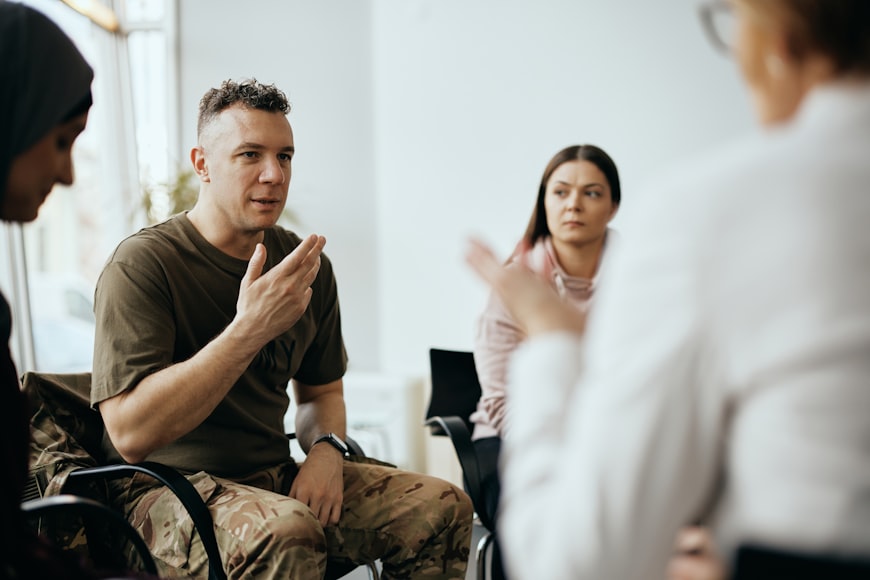
Evidence-based strategies to support metabolic health after service
It’s important to do what you can to support your metabolic health after service. Keep in mind that there’s no “right” or “wrong” when it comes to taking care of yourself. Instead, consider how the following strategies might work for you and adapt them as needed to suit your unique health needs as you transition to civilian life.
Rebuilding sustainable physical activity
Find ways to replace mandatory PT and functional occupational movement with civilian-friendly physical activities. Be sure to wait until it’s safe to do so, or you get clearance from a healthcare professional, if you’re recovering from any injuries or managing any health conditions sustained from your service.
There are many ways for veterans to get started with exercise. Try out different kinds of activities, experimenting until you find what you enjoy in this new phase of your life. Do your best to maintain a routine, even as you test out various workouts. You can also consider exercising with others or joining group exercise classes, both for social connection and to foster accountability.
No matter what you end up doing, prioritize consistency and sustainability in your physical activity. You don’t have to meet any external standards or hold yourself to specific performance metrics. You can develop more specific fitness goals over time. Still, for now, your focus should be on exercising regularly, minimizing injury risk while active, and building functional strength and stamina to carry you through civilian life.
Nutrition strategies
Along with incorporating physical activity into your new routine, be sure to focus on a balanced diet. Eating nutritious food is vital to having the fuel you need to move throughout the day, no matter how much you work out. Some potential areas to focus on include:
- Eating regular, balanced meals
- Eating enough protein
- Enjoying nutrient-dense foods
- Incorporating fruits and vegetables into your diet
- Hydrating adequately and properly
However, always consult with your healthcare provider about your nutrition needs. They can offer customized guidance about your diet and make recommendations for beneficial improvements. For instance, if you’re struggling with your protein intake, they may recommend using a supplement or adding a high-quality protein powder to your water, which not only helps you reach your protein goal, but may also improve your hydration.
Whatever your nutritional needs are, the important thing here, once again, is consistency. Try not to prioritize restrictions or strive for perfection in your diet. Doing so has the potential to harm your metabolism and health. Instead, build structure and routine around your eating habits, including both what and when you eat. You can always adjust your routines as your activity level, health needs, and fitness goals change over time.
Sleep and stress management
Exercise and nutrition are important, but they’re only two pieces of the puzzle when it comes to maintaining your health. Poor sleep has been associated with changes in metabolic markers, including glucose regulation and insulin sensitivity. These effects may improve with consistent, high-quality rest.
Taking steps to support healthy sleep habits can make a meaningful difference. Avoid drinking caffeinated beverages late in the day and try to get to bed and wake up at the same times each day, even on weekends. If an underlying health condition is negatively impacting your sleep, work with your healthcare provider to address it.
Additionally, stress reduction is vital when prioritizing sleep. Stress can have multiple negative impacts on sleep and transitioning from the military to civilian life can be an incredibly stressful time. Be as proactive as possible in reducing stress to protect your sleep when you need it the most. The following strategies may help:
- Focusing on nervous system regulation
- Practicing meditation or mindfulness
- Cultivating a daily routine (a pre-bedtime ritual may be especially helpful)
- Discussing supplements with a healthcare professional before use
- Spending more time outdoors
- Working with a mental health professional, if needed or desired
It can take some time to find the strategies that work right for you. Be realistic in your approach and avoid practices that don’t fit your life. Being open-minded and flexible will benefit your efforts to find the stress-reduction techniques that best serve you and your health.
Preventive healthcare
Preventive healthcare is an excellent way to support your overall health. Don’t skip regular checkups and be sure to get your bloodwork done each year at your annual physical, even if you believe you don’t have any health issues to worry about. The value of preventive healthcare is in detecting health concerns as early as possible.
Screening for factors related to metabolic health—such as weight, blood sugar, cholesterol, and mental health—can help guide early, appropriate interventions when needed.
If you have concerns about changes in weight, blood sugar, or other metabolic markers, a healthcare provider can help you understand your options. To find out if you are eligible for any of these medications, you must talk to a licensed clinician, either in person or through a licensed telehealth platform. They’ll be able to see how these prescription medications fit inside your broader healthcare plan by assessing your medical history and individual risk factors.
These medications are not appropriate for everyone and are typically considered alongside lifestyle changes, ongoing monitoring, and personalized medical guidance.
At the end of the day, there’s no one right way to take care of your metabolic health, nor is there one to transition from the military to civilian life. The most valuable thing you can do is become aware of the health challenges you might face as a new veteran, learn about your options for preventing and managing them, and prioritize the actions that will best serve your health. By being proactive about your self-care and metabolic health, you can put yourself on the path to thriving as a veteran.

Resources for veterans navigating health changes after service
If you need additional help or information on maintaining your health after your military service, please consult the following pages and resources for support:
Federal and national veteran health resources
- U.S. Department of Veterans Affairs (VA) Health Care System: Offers primary care, preventative screenings, nutrition counseling, mental health services, and chronic disease management for eligible veterans. Many VA facilities also provide weight management and whole-health programs focused on long-term wellness.
- VA Whole Health Program: A veteran-centered approach to healthcare that emphasizes lifestyle medicine, stress management, nutrition, movement, sleep, and mental well-being as part of overall health.
- Transition Assistance Program (TAP): A federally mandated program that supports service members as they prepare for civilian life, offering education on healthcare access, lifestyle changes, and long-term well-being after separation.
Nonprofit organizations supporting veteran health and wellness
- Wounded Warrior Project: Provides programs focused on physical health, mental resilience, nutrition education, and long-term wellness for post-9/11 veterans.
- Team Red, White & Blue (Team RWB): Builds veteran communities through physical activity, social connection, and shared purpose, helping veterans reintroduce sustainable movement into civilian life.
- The Mission Continues: Supports veterans through community engagement and structured service opportunities, helping restore purpose and routine—key factors in long-term health behaviors.
- Veterans of Foreign Wars (VFW): Offers advocacy, peer support, and access to wellness and mental health resources through local chapters nationwide.
Preventive health, nutrition, and lifestyle education programs
- CDC Veterans Health Resources: Offers public health data and education related to chronic disease prevention, obesity, diabetes, and cardiovascular health among veteran populations.
- Move! Weight Management Program (VA): A structured program focused on sustainable weight management through nutrition, physical activity, and behavior change, available through many VA facilities.
- Shed: Provides telehealth services that connect patients with licensed healthcare providers for personalized metabolic health and weight-management care.
Crisis, mental health, and sleep support resources
- Veterans Crisis Line: Available 24/7 for veterans experiencing emotional distress or crisis, offering confidential support via phone, text, or chat.
- Give an Hour: Connects veterans with free mental health services provided by licensed clinicians, addressing stress, anxiety, depression, and sleep disorders.
- National Center for PTSD (VA): Offers education and treatment resources related to PTSD, sleep disruption, and stress-related health effects.
Disclaimer:
This content is for informational and educational purposes only and is not intended as medical advice, diagnosis, or treatment. Always consult with a qualified healthcare provider regarding any questions about your health, medications, or treatment options.
Individual experiences may vary. References to specific conditions, outcomes, or treatments are not guarantees of results.
Any mention of medications, including GLP-1 therapies, is for informational purposes only. These medications are available by prescription and are not appropriate for everyone. A licensed healthcare provider can determine whether a treatment is appropriate based on your individual medical history and needs.