
.svg)


You sleep eight hours a night. You’re not skipping meals. You don’t have a diagnosis that explains it. And yet, “tired” is your default setting.
Most of us blame stress, parenting demands, work, busy schedules, and the rigors of daily life for why we feel tired all the time, but this only tells part of the story. Fatigue can strike at the cellular level too, and it tends to get worse with time, not better.
NAD+, a molecule inside every cell of the body, sits at the center of how your body makes energy. Understanding how it works might help you and your provider identify a new way to support your energy levels.

Energy starts in your cells, not your morning coffee
Millions of Americans struggle to start their day without a jolt of caffeine. But while caffeine can help keep you alert, it does this by blocking the chemical that makes you feel sleepy, not by giving you actual energy.
Real energy—the kind your muscles and organs run on—is produced inside your cells in the form of a molecule called ATP (adenosine triphosphate).
Every time you eat, your body breaks down carbohydrates, fats, and proteins and uses them as raw material to produce ATP. This happens through a series of metabolic processes, most critically inside the mitochondria, the powerhouse of the body.
When this process runs efficiently, you feel sharp and energized, ready to take on the day. When it slows down, you start to feel sluggish, foggy, and worn out, even if nothing is technically wrong.
Age, chronic stress, and lifestyle habits can all affect how this process works, and it may take a while to notice you haven’t felt “naturally” energized for a while. At the center of all this is a coenzyme your cells depend on: NAD+.
What is NAD+ and why does it matter for energy?
NAD+ (nicotinamide adenine dinucleotide) is a coenzyme found in every single cell in your body. Its job is essentially to make cellular energy possible. It acts as an electron carrier in the metabolic processes that convert nutrients into ATP. Without it, those reactions grind to a halt.
NAD+ also activates a family of proteins called sirtuins, which are involved in a broad range of biological functions, including DNA repair, inflammation regulation, metabolic balance, and processes associated with healthy aging. They are central regulators of longevity-related pathways—and their activity is directly dependent on NAD+ availability.
In addition, NAD+ is involved in PARP enzymes, which help repair damaged DNA, another process that becomes increasingly important as cells age and accumulate wear.
In short: NAD+ is a foundational molecule that your cells use to stay functional, energized, and resilient.
Is fatigue always an NAD+ problem?
Probably not. Chronic fatigue has many possible causes: thyroid dysfunction, iron-deficiency anemia, sleep apnea, depression, anxiety, vitamin D or B12 deficiency, and blood sugar dysregulation, to name just a few. Before attributing your exhaustion to cellular aging or NAD+ decline, you’ll want to rule out other factors first with a licensed provider.
Here are some of the signals that may indicate that cellular energy is playing a role in your lack of energy:
- Your fatigue has become more pronounced over the past several years, even as your sleep and habits have remained consistent
- You recover more slowly from exercise than you used to
- You experience brain fog or difficulty focusing as much as physical fatigue
- You feel “wired but tired,” aka, depleted but unable to rest deeply
If any of this sounds familiar, it might be a good idea to discuss your NAD+ levels with a provider. But first, let’s talk about why NAD+ levels decline in the first place.

Why NAD+ levels drop over time
If you’ve ever wondered where kids get all their energy, part of the answers lies in their young cells. NAD+ levels don’t stay constant throughout your life; they can drop by as much as 50% between young adulthood and middle age.
It’s not just about aging, though. Lifestyle and environmental factors can accelerate the decline of NAD+:
- Chronic stress triggers inflammation, which consumes NAD+ as part of the immune response
- Alcohol consumption interferes with NAD+ metabolism in the liver
- Sedentary behavior reduces the cellular demand that normally stimulates NAD+ production
- Poor sleep disrupts the circadian signaling that NAD+ synthesis depends on
- Overeating and metabolic dysfunction can shift the body’s use of NAD+ away from energy production
What does this mean in real-life terms? Brain fog that wasn’t there in your 20s. Fatigue that isn’t cured with a good night’s sleep. Slower recovery after exercise. A general sense of running at 70% when you used to feel like 100%.
This reality can be a tough pill to swallow, but it’s all part of a normal biological process.
Can you restore NAD+ levels?
The good news is that NAD+ levels aren’t entirely fixed. There are meaningful ways to support them—some through lifestyle, some through more direct interventions.
Lifestyle strategies that boost energy naturally
- Exercise, particularly high-intensity interval training (HIIT) and strength training, stimulates the body’s own NAD+ pathways.
- Intermittent fasting and caloric restriction have been shown to elevate NAD+ levels and sirtuin activity. However, if fasting makes you feel worse, the priority should be on stable, balanced nutrition and sleep rather than restriction. If you are currently taking a GLP-1 like semaglutide or tirzepatide or any type of NAD+ medication, check with your provider before making any major changes to your diet or meal schedule.
- Quality sleep supports the circadian regulation of NAD+ biosynthesis.
- Limiting alcohol. Alcohol is directly metabolized via NAD+ dependent enzymes and can deplete available stores.
Foods that support NAD+ production naturally
NAD+ isn’t consumed directly from food, but your body can synthesize it from precursors. Foods rich in niacin (vitamin B3) can help support this process. These include:
- Chicken
- Tuna
- Brown rice
- Peanuts
Other precursors, such as nicotinamide riboside (NR) and nicotinamide mononucleotide (NMN), are available as oral supplements and may help support natural energy at the cellular level.*
Injectable NAD+
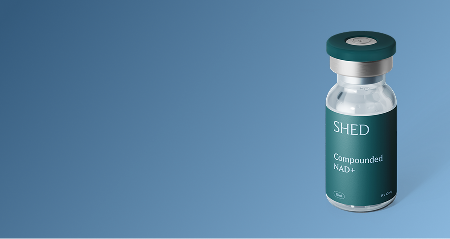
For some people, lifestyle changes and oral supplements aren’t enough. Your provider may recommend injectable NAD+, which delivers the molecule more directly into the body, bypassing digestive breakdown. Nasal spray and oral tablet formulations are also available.
If you’re interested in exploring NAD+ support under medical supervision, Shed offers provider-led NAD+ treatment with licensed medical providers who can evaluate whether it’s appropriate for your needs. Dosing and tolerability can vary and some people experience side effects like flushing, nausea, or headaches, so provider guidance is an essential part of NAD+ therapy.
What the research says about NAD+ (and what it doesn’t)
NAD+ research is an exciting field, but it’s still evolving.
Here’s what’s well-supported by science so far:
- NAD+ is essential to mitochondrial energy production and ATP synthesis
- Levels decline with age
- Precursors like NR and NMN can help raise NAD+ levels
- Sirtuin activation via NAD+ plays a role in cellular maintenance and longevity pathways
And here’s what’s still being studied:
- The exact therapeutic benefits of raising NAD+ levels in humans (as opposed to animals)
- Optimal dosing protocols for different age groups and conditions
- Long-term outcomes of NAD+ supplementation or injection therapy
The science supporting NAD+ is real and substantial, and preclinical evidence is strong, we just need more large-scale human trials to fully understand the effects. Rest assured, NAD+ isn’t just a fad, but it’s a good idea to keep expectations in check and to talk through the science with your provider.
Your energy has a biological story
Persistent fatigue doesn’t mean you’re failing at life, or even that you’re doing too much. Sometimes it’s the downstream effect of what’s happening at the cellular level. Giving our cells some extra support, rather than relying on short-term energy bursts like caffeine, can help address energy levels right at the source.
This can happen through lifestyle changes, NAD+ supplementation, or medical NAD+ support. If you’re curious whether NAD+ support may be relevant to what you’re experiencing, Shed facilitates access to licensed providers who can evaluate if compounded NAD+ is appropriate for you. (Note: Compounded medications are not FDA-approved. They are prepared by a licensed pharmacy based on a provider’s prescription.) This is a simple way to open up a conversation with a professional so you don’t have to try to tackle your energy problems on your own.
Frequently asked questions
Why do NAD+ levels decline with age?
NAD+ levels naturally decrease as part of the aging process; research suggests they can drop by as much as 50% between young adulthood and middle age. This decline happens because the enzymes that consume NAD+ (including those involved in DNA repair and immune response) become more active over time, while the body’s ability to synthesize it slows down. Lifestyle factors like chronic stress, poor sleep, alcohol use, and sedentary behavior can accelerate this process.
Can low NAD+ levels cause fatigue?
Yes. Low NAD+ can contribute to fatigue because it’s essential to mitochondrial energy production, the process your cells use to generate ATP. When NAD+ levels drop, this process becomes less efficient, which can manifest as persistent tiredness, brain fog, slower exercise recovery, and reduced mental stamina. However, fatigue has many potential causes; low NAD+ is just one piece of the puzzle. A licensed provider can help determine what’s at the root of your fatigue.
How can you increase NAD+ levels naturally?
You can support NAD+ production by exercising regularly (especially HIIT and strength training), getting more quality sleep, and limiting alcohol consumption. Eating foods rich in niacin (vitamin B3) can also help, as they provide dietary precursors the body uses to produce NAD+. Supplements containing NR or NMN are also commonly used to help support NAD+ levels.*
What is injectable NAD+ and who is it for?
Injectable NAD+ is a form of NAD+ therapy administered directly into the body, bypassing the digestive system for more direct delivery. It’s typically used by people who haven’t seen results from lifestyle changes or oral supplements alone, or for those looking for more clinically guided support. It is not appropriate for everyone, so a provider consultation is a required first step.
*This statement has not been evaluated by the FDA. This product is not intended to diagnose, treat, cure, or prevent any disease.
This content is for informational purposes only and is not medical advice. Consult a licensed healthcare provider before starting or changing any medication.
Compounded medications are not FDA-approved for safety, effectiveness, or quality. They are prepared by a licensed pharmacy based on a provider's prescription. Results may vary.