



.svg)


Early-stage male pattern baldness can often be slowed or partially reversed with FDA-approved treatments like minoxidil and finasteride. Advanced hair loss is harder to reverse, but progression can be slowed or halted. Starting treatment early dramatically improves outcomes.
The quest to cure baldness is a tale as old as time. Ancient Egyptians rubbed animal fat on their scalps. Hippocrates treated his own baldness with a self-made concoction that included opium, horseradish, pigeon droppings, and spices.
While modern medicine has come a long way in understanding and treating male pattern baldness, with hair loss affecting 30% of men by age 30 and 50% of men by age 50, it’s still the question at the heart of many Google searches and dermatologist visits: can male pattern baldness actually be reversed, or even prevented?
The answer, as is often the case, is nuanced and depends on the individual.
What causes male pattern baldness?
Before you can fight hair loss, it helps to understand the factors that can contribute to it.
Hormones
The main culprit behind baldness in men is a hormone called dihydrotestosterone, or DHT. DHT is the active form of testosterone, and in men who are genetically predisposed to hair loss (known as androgenetic alopecia, or AGA), it causes the cells surrounding hair follicles to shrink and eventually die off. The follicles most sensitive to DHT are those on the top and front of the head, where baldness typically starts.
While hair follicles aren’t disappearing, they are shrinking, which means they produce thinner, finer, shorter hairs over time until they stop producing visible hair altogether. This distinction matters because it means that in many cases, dormant follicles can still potentially be reactivated, especially when treated early.
Genetics
Male pattern baldness is influenced by multiple genes inherited from both parents. The popular belief is that baldness comes from your mother’s side of the family, but the reality is more complicated. You can inherit the predisposition from one or both of your parents.
Related: Is your hair loss genetic, or is it something else?
What is the Norwood Scale?
Dermatologists use the Norwood Scale to classify the progression of male pattern baldness from stage 1 (no significant loss) through stage 7 (extensive baldness across the crown and top). Knowing where you fall on the scale helps both you and your provider choose the right treatment and set realistic expectations.
For example, if you’re in a later stage (4–7), the goal would be to stabilize hair follicles and improve density rather than return fully to your teenage hairline.
The takeaway: The earlier you act, the more options you have. Hair follicles that have been dormant for years are much harder to revive than follicles that are just beginning to shrink.
FDA-approved treatments for hair regrowth for men
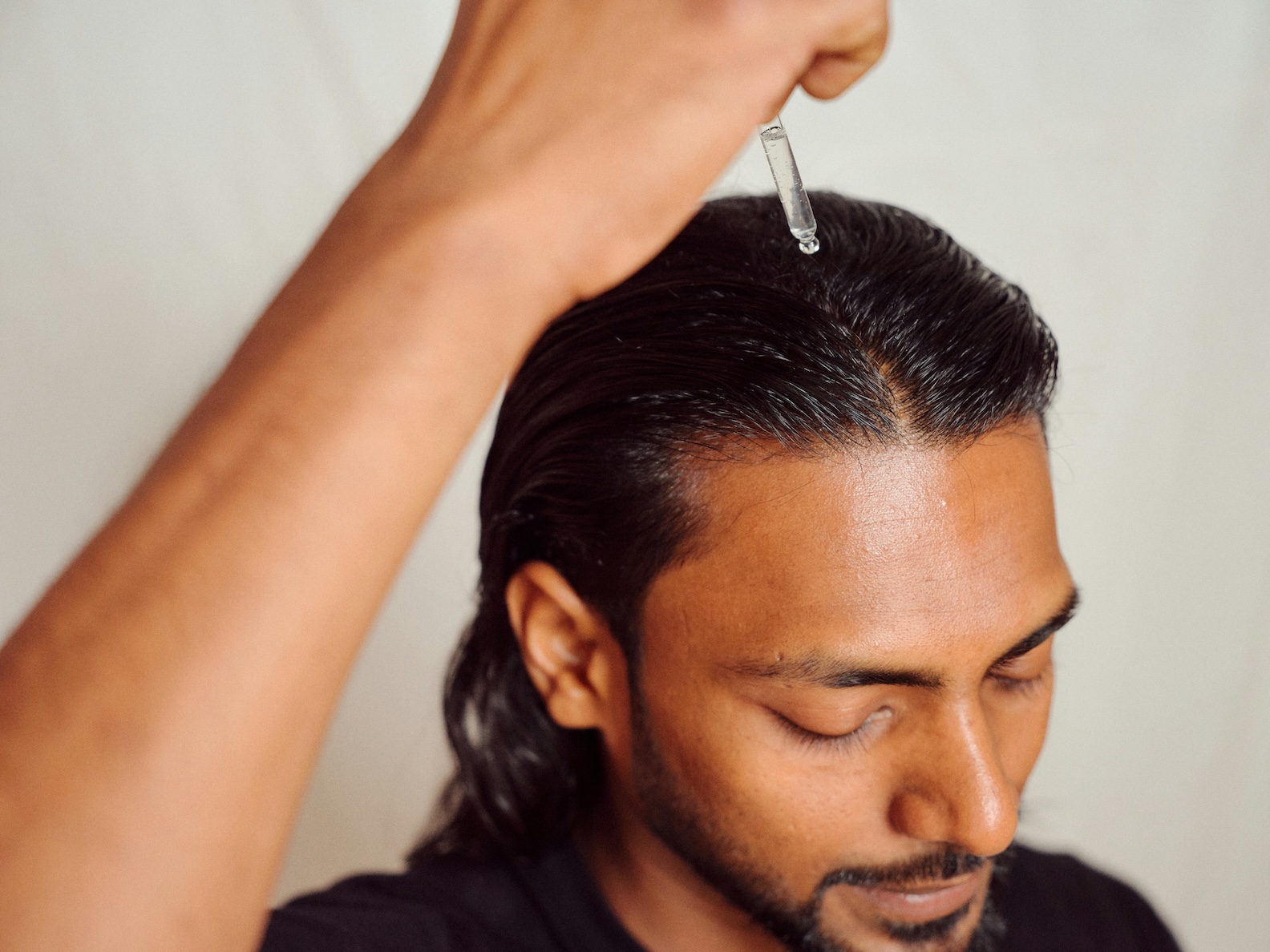
There are currently two FDA-approved treatments for male pattern baldness that have decades of clinical evidence behind them: minoxidil and finasteride. Neither is a miracle cure, but both have been shown to be effective, especially when treatment starts early.
Minoxidil (Rogaine)
Minoxidil was originally developed as a blood pressure medication, but researchers noticed that one of its side effects was increased hair growth. This led to it being reformulated as a topical treatment, which was approved by the FDA for hair loss (for both men and women) in the 1980s.
How it works: Minoxidil is thought to work by widening blood vessels and improving blood flow to the scalp, which extends the anagen (growth) phase of the hair follicle’s active growth pattern and may help reactivate miniaturized follicles.
Effectiveness: Studies on 5% topical minoxidil found that it was rated as at least somewhat effective in stimulating new hair growth by approximately 84% of patients, with 67% of men saying the scalp area affected was smaller than before treatment. While many benefit from minoxidil treatment, results vary from person to person.
Timeline: Most men see noticeable results after 3–6 months of consistent use. Minoxidil must be continued to maintain results—stopping treatment or not using consistently can lead to a return of hair loss.
Potential side effects: Minoxidil can cause a temporary increase in shedding early on in treatment, but this is normal. If you have a history of cardiovascular issues or low blood pressure, disclose this information to your provider before considering an oral minoxidil.
Finasteride
Instead of stimulating the follicle directly, finasteride blocks the enzyme that converts testosterone into DHT. This can help slow or stop the miniaturization process.
Effectiveness: Clinical data shows improvements in hair growth in 48% of recipients at 1 year and in 66% after 2 years, with 83% showing no further hair loss by the 2-year mark. Consistent use is required to maintain results.
Side effects: While most men tolerate finasteride well, there have been rare reports of ongoing side effects after discontinuation, sometimes referred to as post-finasteride syndrome. These may include sexual side effects, mood changes, or other persistent symptoms. Finasteride should never be used or handled by anyone who is pregnant or trying to conceive, so if you have a pregnant partner, they should avoid handling the medication. Talk with your licensed provider about the risks and benefits of finasteride before starting treatment.
Combination therapy: The gold standard
Using minoxidil and finasteride together is increasingly considered the most effective non-surgical approach to treating male pattern hair loss. While many find combination therapy to be effective, keep in mind that results vary depending on stage of hair loss, consistency of treatment, and individual biology.
For men who are serious about addressing their hair loss, combination therapy offers the best evidence-backed option available without surgery.
What surgical options are available for hair loss?
For men who want more dramatic or permanent results—or whose hair loss has progressed beyond what topical treatments can address—surgical options are available as well. The most common include:
- Hair transplants, which involves moving hair follicles from a donor area (usually the back and sides of the scalp) to the thinning or bald areas.
- Low-level laser therapy, which uses devices that emit low-energy red light to stimulate hair follicles. While results are often more modest than those seen with minoxidil or finasteride, it can be a useful complement to other therapies.
When is hair loss no longer reversible?
Modern treatments for hair loss have come a long way, but there are still limits. True reversal—restoring a full head of hair after years of significant loss—is not yet reliably achievable. Once follicles have been dormant for long enough and fully miniaturized, they become much harder to reactivate.
This is why early intervention is so important; the window for reversing hair loss in men doesn’t stay open forever. If you’re noticing thinning, now is the best time to act.

Practical advice for men experiencing hair loss
1. See a provider early
The single most impactful thing you can do is consult a licensed provider sooner rather than later. They can confirm whether what you’re experiencing is hormone related or due to other factors (like stress or nutritional deficiencies) and recommend a safe and appropriate treatment plan.
2. Know your Norwood Stage
Knowing where you fall on the Norwood Scale helps you and your provider calibrate expectations and choose the right interventions. Early-stage loss (stages 1–3) is generally more responsive to medical treatment than later-stage loss.
3. Make lifestyle changes
While lifestyle changes alone won’t reverse hair loss, they can support overall hair health. This includes:
- Nutrition: Deficiencies in biotin, zinc, vitamin D, and iron have been linked to increased hair shedding.
- Stress management: Chronic stress can trigger or worsen hair loss.
- Scalp health: A clean, healthy scalp creates better conditions for hair follicles. Some men find that regular scalp massages improve circulation.
4. Set realistic expectations
Most men who start treatment early can expect to slow or stop their hair loss and see meaningful improvements in hair density. Full reversal is possible for some in the early stages of hair loss, but it’s not guaranteed. Remember that progress is slow, consistency is critical, and effectiveness of treatment varies from person to person.
How Shed can help
Navigating provider schedules and availability can be overwhelming enough to stop people from considering treatment at all. This is exactly the barrier Shed was built to remove.
Shed is a fully online telehealth platform that offers personalized, provider-recommended hair-loss treatment plans for men and women. Medication is shipped straight to your door—no waiting rooms, in-person consultations, or pharmacy runs needed.
Shed’s men’s hair treatment lineup
Shed offers four core men’s hair products, each targeting the root hormonal and inflammatory drivers of male pattern baldness.
- Men’s Minoxidil + Finasteride Serum: Topical drop formula that combines minoxidil and finasteride in a single easy-to-apply serum. Designed to support hair regrowth, reduce thinning, and address DHT-related hair loss directly at the scalp.
- Men’s 3-in-1 Hair Tablet: Oral tablet combining minoxidil, finasteride, and biotin in one daily pill. Helps support thicker, fuller hair, stronger strands, and follicle-level DHT protection.
- Men’s 5-in-1 Hair Serum: Topical formula with minoxidil, finasteride, tretinoin, vitamin E, and flucinolone. Helps address hormonal, inflammatory, and scalp factors simultaneously, making it a strong option for men who want a more thorough approach to early-stage or moderate hair loss.
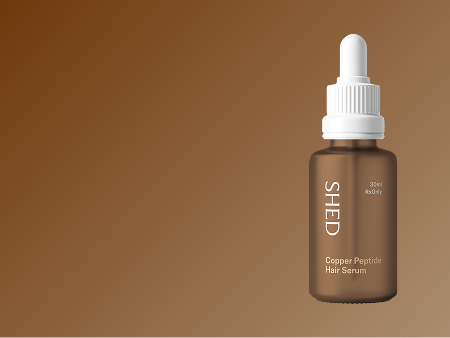
- Copper Peptide Hair Serum: Non-prescription topical option using copper peptide (GHK-Cu) technology. Copper peptides have been studied for their ability to support follicle resistance, promote a balanced hair-growth cycle, and reduce scalp inflammation.
Ready to take the first step? Getting started takes just a few minutes. Explore Shed’s men’s hair solutions today to see if you qualify.
FAQs
Can male pattern baldness actually be reversed, or just slowed?
It depends on what stage your hair loss is at. Consistent treatment for early-stage hair loss can produce regrowth by reactivating miniaturized follicles. In later stages, the primary goal shifts to preventing further loss and improving density rather than full reversal.
When does hair loss typically start for men?
Balding can begin as early as the late teens or early twenties, though it’s more commonly noticeable in a man’s 30s or 40s. Earlier onset is often associated with more rapid progression, which is another reason not to delay treatment if you’re noticing thinning.
See also: The men’s receding hair line guide by decade
Does hair loss come from your mother’s or father’s side?
Both. The old belief that baldness is inherited exclusively from your maternal grandfather is a myth. Male pattern baldness is polygenic, meaning it’s influenced by multiple genes from both sides of the family. If baldness runs in your family at all, it’s worth being proactive about your own hair health.
Do I need a prescription for hair-loss treatments?
It depends on the type of treatment. Minoxidil is available over the counter in topical form, but the oral form requires a prescription, as does finasteride. Telehealth platforms like Shed make it easy to get a licensed provider consultation and prescription without the hassle of visiting a clinic in person.
Are there natural remedies that work for hair loss?
Some natural options (like saw palmetto and rosemary oil) have limited supportive evidence, but none have the level of clinical evidence that minoxidil and finasteride have and should not replace proven treatments.
What’s the difference between hair shedding and hair loss?
Shedding is normal—most people lose 50–100 hairs per day as part of the natural hair-growth cycle. Hair loss refers to a process where follicles progressively miniaturize and stop producing visible hair. If you’re noticing diffuse, all-over shedding, it’s worth investigating other potential causes with a licensed provider. If the thinning follows the classic baldness pattern (hairline, crown), it’s more likely to be androgenetic alopecia (AGA, or male pattern baldness).
Can stress cause male pattern baldness?
Stress doesn’t directly cause male pattern baldness, but it can trigger a separate condition called telogen effluvium, a temporary but significant increase in shedding. In men predisposed to male pattern baldness, this added shedding can accelerate the appearance of thinning. Managing chronic stress is a useful complement to any hair-loss treatment plan.
This information is for educational purposes only and is not a substitute for medical advice. Please consult your healthcare provider before starting or changing any medication.
Compounded medications are prepared by licensed pharmacies to meet individual patient needs. While they are not reviewed or approved by the FDA for safety or effectiveness, they are made in accordance with strict regulatory guidelines. Medication is prescribed only after consultation with a licensed provider to determine appropriateness. Product images are for illustrative purposes only. Individual results may vary.
In rare cases, some individuals report persistent side effects after stopping finasteride, a condition referred to as Post-Finasteride Syndrome (PFS). Symptoms may include sexual, neurological, and psychological changes. PFS is not fully understood or recognized by the FDA and remains under investigation. Consult a healthcare provider to discuss potential risks and benefits before starting or discontinuing finasteride.
Although uncommon, finasteride has been associated in some cases with changes in mood, anxiety, depression, and rare reports of suicidal thoughts or behavior. These effects may occur during use or after discontinuation. If you experience any changes in mental state, seek medical attention immediately. Consult a healthcare provider to discuss potential risks and benefits before starting or discontinuing any medications.