
.svg)


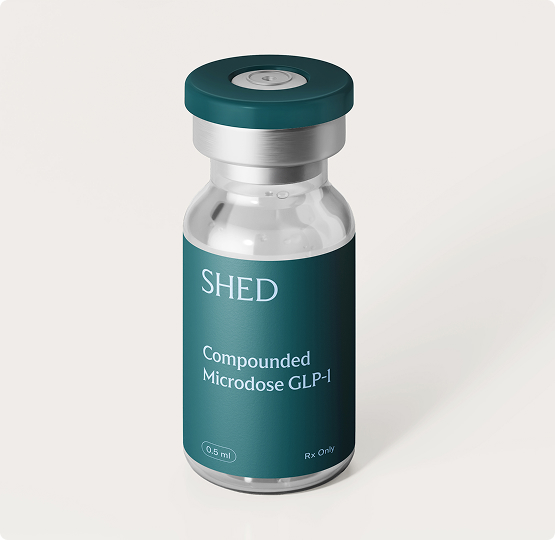

Most people first hear about liposomal products through supplements such as liquid vitamin C, glutathione, herbal blends, or soft-gel “bubbles.” But liposomes didn’t begin in the supplement aisle. Their story starts in pharmaceutical science.
Liposomal delivery systems were created to help medications move through the body more effectively, protect delicate ingredients, and reduce unwanted breakdown along the way. Only later did the supplement industry adopt this technology to solve issues like poor stability, low absorption, and irritation from traditional oral formats.
Today, liposomes are showing up everywhere in metabolic health, longevity medicine, and advanced nutritional formulations, including emerging formats for GLP-1-related therapies and NAD+ support.
To understand why, it helps to look at why liposomes were invented in the first place.
Liposomes were first built for pharmaceutical challenges
Liposomes are microscopic lipid (fatty) layers that wrap around ingredients, protecting them from stomach acid and helping them get absorbed more efficiently. They can hold nutrients or medications inside and protect them as they travel through the body.
Liposomes are similar in structure to the outer layer of a cell, and can hold or encapsulate both water and fat-soluble substances.
The earliest liposomal systems were studied in the mid-1960s for medications that needed extra protection or precision, including:
- Chemotherapy agents
- Antifungal drugs
- Vaccines
- Gene and RNA delivery
- Hormone and peptide stabilization
These medications required a delivery method that could shield sensitive compounds, move through cell membranes, release ingredients gradually or closer to the target tissues, and improve comfort and tolerability.
Liposomes became a strong candidate because their structure closely resembles human cell membranes. Pharmaceutical chemists saw that liposomes could behave predictably in the body, something very few delivery systems can offer.
This pharmaceutical foundation is the reason liposomes are now relevant far beyond supplements.
Why liposomes are useful for pharmaceutical agents and what this means for modern wellness
1. They help protect delicate molecules
Peptides, metabolic hormones, and coenzymes are easily damaged by:
- Stomach acid
- Digestive enzymes
- Oxygen and light
- First-pass liver metabolism
Encapsulating these compounds in a liposomal “shell” can help shield them as they move through the body. This is one of the reasons liposomal systems have long been used in vaccines and certain cancer therapies.
This same principle is now being explored for molecules used in metabolic health, including GLP-1 and related technologies, not to necessarily make them “stronger,” but to protect them through their delivery route, keeping them more effective.
2. They interact naturally with cell membranes
Liposomes mimic the structure of human cells, which allows them to:
- Merge with cell membranes
- Support intracellular transport
- Move past some absorption barriers
Pharmaceutical scientists have relied on this technology for decades. Later, supplement brands used the same concept for ingredients like glutathione or curcumin that struggle in traditional oral formats.
3. They can support lower-dose or slow-release formats
A major pharmaceutical advantage of liposomes is their ability to:
- Slow down how quickly an ingredient releases
- Reduce sharp peaks and drops
- Allow for microdosing approaches in certain categories
This has become especially relevant in metabolic health and longevity, where steady, gentle delivery can be desirable, not as a replacement for prescription medications, but as a different formulation design.
How liposomes compare to other oral delivery systems
To understand why liposomes stand out, it helps to compare them to familiar formats like capsules, tablets, and emulsions.
Most traditional delivery systems rely on:
- Digestive breakdown
- Passive diffusion through the gut
- Surviving stomach acid and enzymes
This can be challenging for fragile ingredients.
Other enhanced delivery methods, such as micronization (making particles extremely small), cyclodextrins (tiny natural carriers that help ingredients dissolve), or oil-based emulsions, can help ingredients mix, disperse, or stay stable. However, none of these systems interact with human cell membranes the way liposomes do, which is what makes liposomes uniquely suited for protecting delicate molecules and supporting a gentler route through the body.
This doesn’t mean liposomes are “better” in every case. Every delivery system has strengths depending on the ingredient and desired effect. But it does explain why liposomes are often chosen for compounds that degrade easily, require extra protection, or benefit from controlled or gradual release.
Why people might think liposomes are for supplements
Simply put, supplements were the first place consumers actually saw them.
Pharmaceutical companies used liposomal systems for decades, but patients never interacted with the delivery technology; it wasn’t marketed, positioned, or explained. It was just part of the formulation.
Supplements changed that.
Once liposomal supplements reached the consumer market, brands highlighted the delivery mechanism. This did two important things:
It made advanced delivery science accessible
People became familiar with terms like “liposomal,” “bioavailability,” and “cellular delivery,” which were previously confined to pharmaceutical literature.
It built trust
High-quality supplement brands positioned liposomes as a premium delivery method. Over time, consumers came to associate liposomal products with:
- High-end formulation
- More thoughtful design
- Science-informed delivery
So instead of creating confusion, supplements actually helped normalize a pharmaceutical technology, giving the public a language and a framework to understand it.
The result: People now see liposomes as a familiar, reliable, and modern delivery method, even though the science began in medicine long before supplements adopted it.
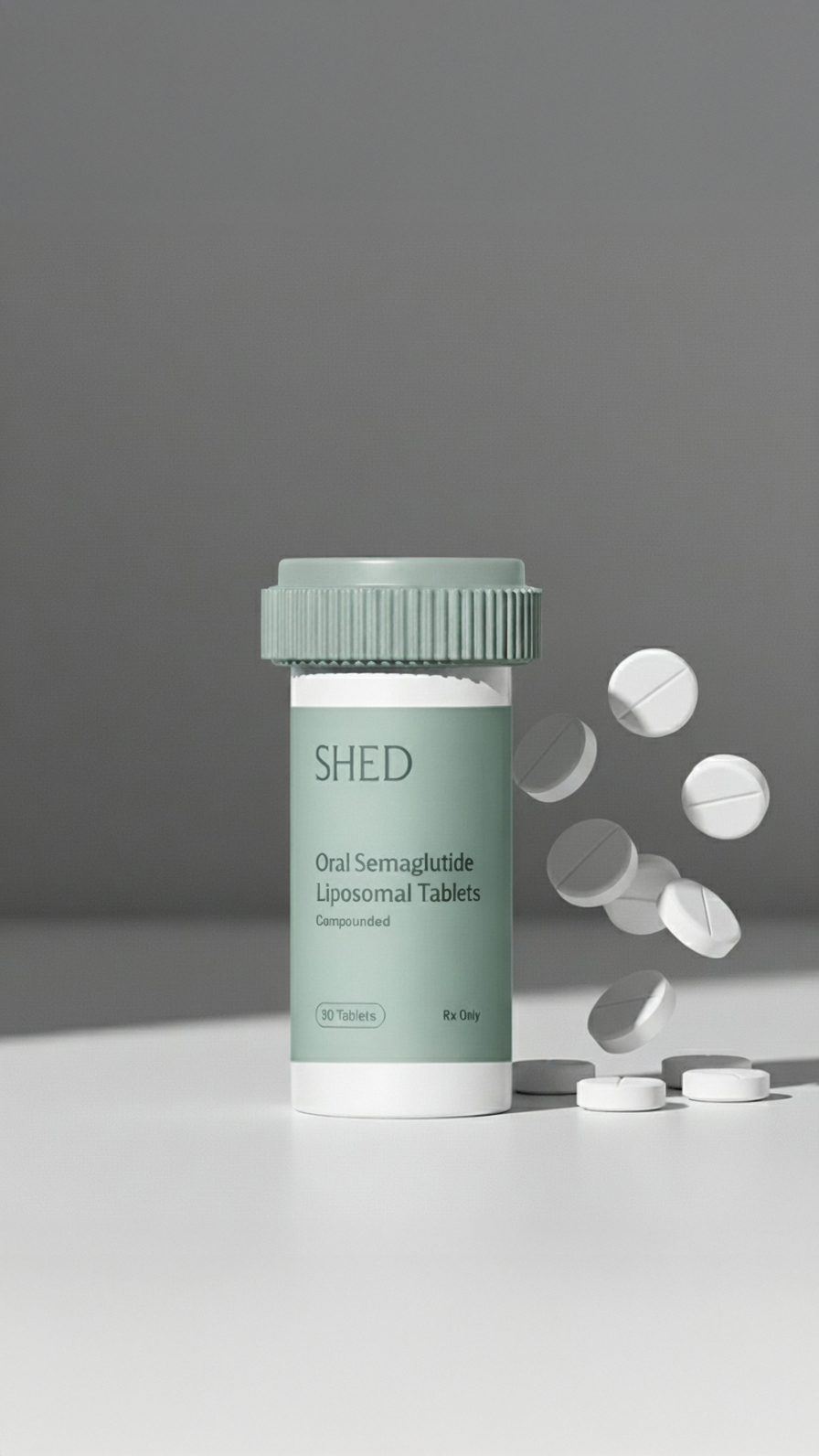
The multilamellar liposomal structure used by Shed’s pharmacy partner
Shed's pharmacy partner uses solid-state liposomes, which are made into uniform, powder-like, smaller particles under 200 nanometers (invisible to the eye).
The liposomal formulations used are built with a multilamellar lipid structure, meaning multiple layers of phospholipids rather than one. This design:
- Adds additional stability, consistency, and bioavailability
- Provides gentle protection for sensitive ingredients
- Supports a more controlled, predictable release
- Mirrors natural biological architecture
This doesn't make it “better” or “stronger,” and individual responses vary. It simply reflects a science-informed approach to delivery that aligns with human cellular biology and can be applied across metabolic and longevity-support formulations, including Shed's Oral Semaglutide Liposomal Tablets.
The purpose isn’t to claim superior absorption, but to use a delivery method with deep pharmaceutical roots in a modern, accessible wellness setting.
Liposomal delivery: A bridge to wellness
Liposomal delivery was developed for medications that needed protection, precision, and adaptability. Now, as metabolic health, longevity science, and advanced nutraceuticals evolve, liposomes offer a bridge between pharmaceutical-grade design and approachable wellness tools—helping modern formulations use delivery systems supported by decades of scientific development.
FAQs
What is liposomal delivery, in simple terms?
Liposomal delivery is a way of packaging nutrients or compounds inside tiny lipid layers that resemble human cell membranes. This structure helps protect sensitive ingredients as they move through the digestive system to support absorption by the body.
Why are liposomes associated with better absorption?
Rather than relying solely on digestion and passive diffusion, liposomes can interact more naturally with cell membranes because of their structural similarity. This doesn’t guarantee higher absorption in every case, but it can help fragile compounds survive the digestive process and reach the body in a more usable form.
What does liposomal delivery have to do with GLP-1 therapies?
GLP-1 medications involve ingredients like semaglutide and tirzepatide that are sensitive to digestion and environmental breakdown. Liposomal encapsulation helps protect ingredients from being broken down by the harsh stomach environment so they can be absorbed and used by the body.
Why is delivery method important for GLP-1–related formulations?
GLP-1 pathways are sensitive to dose, timing, and consistency. Delivery methods influence how a compound moves through the body. Liposomal technology can help shield ingredients from digestive stress and support a more gradual interaction with the body compared to traditional oral formats.
Are liposomal products formulations stronger or faster acting?
No. Liposomal delivery is not about increasing potency or speed. They are designed to protect ingredients and support absorption rather than create rapid spikes in activity.
References
1. Allen & Cullis (2013) – Liposomal drug delivery systems
DOI Link:
https://doi.org/10.1016/j.addr.2012.09.037
2. Barenholz (2012) – Doxil, first FDA-approved liposomal drug
DOI Link:
https://doi.org/10.1016/j.jconrel.2012.04.046
3. Torchilin (2005) – Liposomes as pharmaceutical carriers
DOI Link:
https://doi.org/10.1038/nrd1632
4. Stone et al. (2016) – Liposomal Amphotericin B review
DOI Link:
https://doi.org/10.1093/cid/civ885
5. Sinha et al. (2018) – Liposomal glutathione supplementation (supplement example)


