
.svg)


You're sleeping fine, eating reasonably well, and still dragging by 2 p.m. every day. That's usually the moment someone mentions NAD+ injections, a treatment that's gone from niche longevity clinics to a fairly mainstream wellness trend in the last few years.
Here's what NAD+ actually does in your body, what the injections are supposed to help with, what they cost, and where the evidence stands right now.
What Is NAD+?
NAD+, short for nicotinamide adenine dinucleotide, is a coenzyme found in every cell in your body. It plays a central role in converting food into cellular energy, and it's also involved in DNA repair and the activity of sirtuins, a group of proteins tied to cellular aging.
NAD+ levels naturally decline as you get older. That decline is part of why NAD+ has become such a focal point in longevity research, alongside related compounds like methylene blue, which supports a different part of the same cellular energy system.
What Are NAD+ Injections Used For?
- Cellular energy support: NAD+'s core role in mitochondrial function is the main reason people try it for fatigue and low energy.
- Cognitive clarity and focus: Some users report sharper focus, though this is based mostly on self-reported experience rather than large clinical trials.
- Recovery and athletic performance: Athletes and active people sometimes use NAD+ to support recovery between training sessions.
- Longevity and anti-aging support: This is the area getting the most research attention, tied to NAD+'s role in cellular repair processes.
- Detox and hangover recovery: A popular use case, but also the one with the least direct evidence behind it.
Does NAD+ Really Work?
The basic science behind NAD+'s role in metabolism and cellular aging is well established. Where things get less clear is the jump from that basic science to injections and IV infusions specifically. Most of the rigorous clinical research so far has focused on oral NAD+ precursors, like NR and NMN, rather than direct injections.
According to the National Institute on Aging, NAD-boosting approaches show real promise, but researchers still need more human trials before drawing firm conclusions about long-term benefits. That's a fair summary of where injections stand too. Promising mechanism, genuine anecdotal interest, and a research base that's still catching up.
NAD+ Injections vs. NAD+ Precursors
A common point of confusion is the difference between direct NAD+ injections and precursor supplements like NR (nicotinamide riboside) and NMN (nicotinamide mononucleotide), which you take orally so your body can convert them into NAD+ on its own.
Precursors are convenient and don't require an appointment, but conversion efficiency varies from person to person, and absorption through the digestive system means some of the dose is lost along the way. Injections bypass digestion entirely, delivering NAD+ directly into your system, which is part of why some people notice a more immediate effect with injections compared to daily oral supplements.
Neither approach is universally better. Some providers recommend starting with an oral precursor for convenience and moving to injections if you want a more noticeable, faster-acting option.
Who Should Be Cautious About or Avoid NAD+ Injections?
NAD+ isn't right for everyone, and a good provider should screen for a few specific situations before recommending it. Pregnant or breastfeeding people are generally advised to avoid NAD+ therapy, since there isn't enough safety data in these populations. People with active cancer or a recent cancer diagnosis should talk to their oncologist first, since there's some theoretical concern that boosting cellular energy production broadly could also support rapidly dividing cells, though this hasn't been definitively shown to be a problem in the context of NAD+ supplementation specifically. Anyone with a bleeding disorder or on blood thinners should also flag that during intake, particularly before an IV infusion.
None of this means NAD+ is inherently dangerous for these groups, it means it deserves a real conversation with a provider who knows your full health history rather than a quick yes at checkout.
Does NAD+ Help With Exercise Performance and Recovery?
This is one of the more common reasons active people ask about NAD+, and the underlying logic makes sense on paper. NAD+ is directly involved in how your mitochondria produce ATP, the energy your muscles use during exercise, and it also plays a role in muscle repair processes after a workout. Some athletes report feeling like they recover faster or hit a plateau less often when using NAD+ alongside training.
The research specifically on athletic performance is still thin compared to other areas of NAD+ research. Most of what's known comes from the broader metabolic and aging literature rather than dedicated sports performance trials, so it's reasonable to think of this as a plausible, mechanistically-grounded use rather than a proven performance enhancer.
What Does an NAD+ Injection Appointment Look Like?
Most providers start with a quick health history review before your first session, then offer either a subcutaneous injection or a slower IV infusion depending on your goals and tolerance.
IV infusions deliver NAD+ more slowly, which tends to reduce side effects but takes a bigger time commitment. Subcutaneous injections are faster and more convenient for ongoing maintenance, which is why a lot of people transition to injections after an initial IV series.
How Much Do NAD+ Injections Cost?
Pricing varies a lot by clinic, dose, and format. IV infusions typically run $150 to $400 per session, depending on the dose and add-ons. Subcutaneous injections are generally more affordable, often $30 to $75 per dose, which makes them a more realistic option for anyone planning to use NAD+ on an ongoing basis rather than as a one-time treatment.
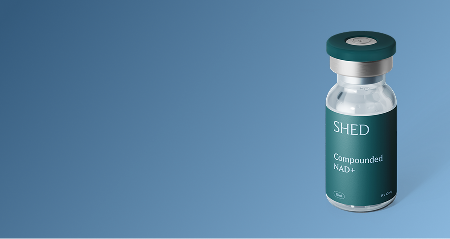
Many providers, including Shed's NAD+ injection program, offer maintenance protocols that bundle sessions together, which can bring the per-dose cost down compared to paying for individual visits.
What to Expect After an NAD+ Injection
Most people tolerate NAD+ well. Mild flushing, a warm sensation, or brief nausea can happen, especially if the dose is administered too quickly. Slower administration, whether through a subQ injection or a properly paced IV drip, usually keeps side effects minimal. Injection site redness or mild soreness is also possible and typically resolves on its own within a day or two.
Is NAD+ Right for You?
NAD+ injections tend to make the most sense for people already focused on energy, recovery, and long-term metabolic health, especially as one piece of a broader plan rather than a standalone fix. It's worth having a real conversation with a provider about your goals, your labs, and whether NAD+ fits alongside anything else you're already doing, including health coaching if habit-building is part of your goals too.
If you're curious whether NAD+ makes sense for your goals, Shed's longevity programs can walk through your options and build a plan around what your body actually needs.
FAQs About NAD+ Injections
What is NAD+ used for?
NAD+ supports cellular energy production, DNA repair, and sirtuin activity. Injections are typically used for energy, recovery, cognitive clarity, and longevity support.
Is NAD+ good for you?
NAD+ is essential to normal cell function, and levels naturally decline with age. Supplementing it through injections is generally well tolerated, though long-term benefits are still being studied.
Does NAD+ really work?
The science behind NAD+'s role in the body is solid, but research specifically on injections is still developing. Many people report noticeable energy and focus benefits, though individual results vary.
How much do NAD+ injections cost?
IV infusions typically cost $150 to $400 per session. Subcutaneous injections are usually more affordable, often $30 to $75 per dose, especially with a maintenance plan.
How often do I need NAD+ injections?
Frequency depends on the format and your goals. IV infusions are often used weekly to monthly, while subcutaneous injections are commonly used once or twice a week for ongoing maintenance.
Who should avoid NAD+ injections?
People who are pregnant or breastfeeding, and those with active cancer or a recent cancer diagnosis, should talk to their doctor or oncologist before starting NAD+ therapy. Anyone on blood thinners should also mention that during intake.
Does NAD+ help with exercise recovery?
It's mechanistically plausible, since NAD+ is directly involved in cellular energy production and muscle repair, but dedicated research on athletic performance specifically is still limited compared to other areas of NAD+ research.
Disclaimer:
This content is provided for educational and informational purposes only and is not intended as medical advice, diagnosis, or treatment. You should consult a licensed healthcare provider for evaluation and guidance specific to your situation before starting or changing any treatment, supplement, or medication.
Compounded medications and injections are not FDA-approved for safety, effectiveness, or quality in the same way brand-name pharmaceuticals are. They are prepared by a licensed pharmacy based on a provider's prescription. Results may vary.
Shed is not a pharmacy and does not dispense medications. Prescriptions are fulfilled and shipped by a licensed third-party dispensing pharmacy.